Core Surgical Training
How to Prepare for the CST Clinical Questions
The two clinical scenarios in the CST interview: the five-part answer structure, the CCrISP and ATLS scripts, the follow-ups and the five-minute pacing.
By the TheatrePass editorial team · updated 2 September 2026 · 10 min read
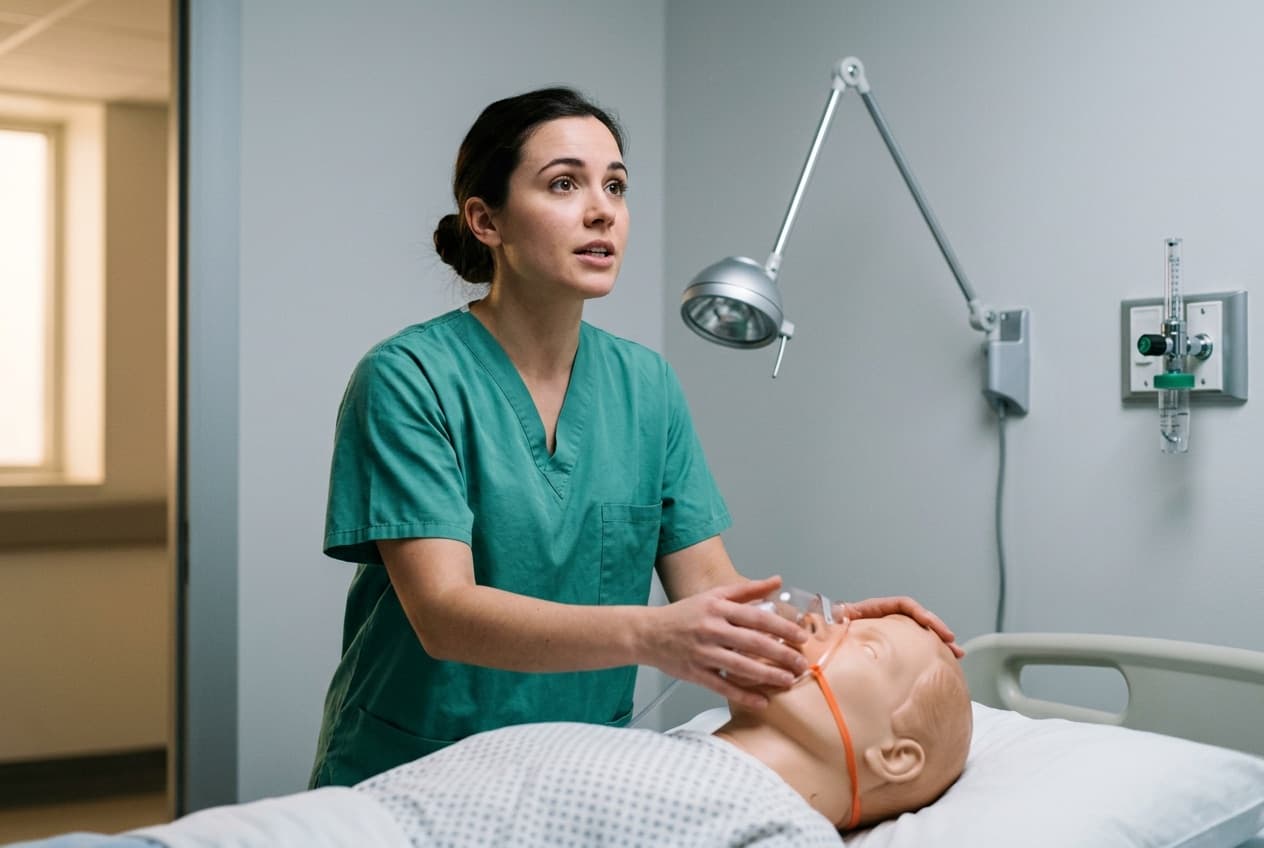
Two of the three questions in the Management and Clinical station are clinical scenarios, five minutes each, scored 0 to 6 on clinical skills and knowledge, judgement under pressure and prioritisation, and communication. One is usually an emergency or a trauma call; the other a deteriorating post-operative patient. You already know the medicine. The marks are lost by candidates who cannot talk through it in order, without stopping, while the clock runs. This guide gives you the structure the panel is listening for.
The five-part structure
| Part | What it contains |
|---|---|
| 1. Opening statement | The patient may be critically unwell; you would review immediately; charts and fresh observations requested; in trauma, the trauma call and a resuscitation bay |
| 2. Immediate assessment | A to E, saying for each letter what you check, examine and do |
| 3. Full patient assessment | A focused history, then the fluid chart, drug chart, operative notes and NEWS trends, and recent results |
| 4. Investigations | Bedside, haematological and radiological, naming the definitive test and what it excludes |
| 5. Definitive management | Differentials, treatment for each, optimisation for theatre, escalation and MDT discussion |
1. The opening statement
Do not jump straight into A to E. The opening statement signposts your prioritisation and impresses the panel early, and it carries easy marks:
This patient sounds critically unwell and I would go and assess them immediately. I would first ask the nurse to prepare the drug chart, fluid chart and operative notes for my arrival, and would kindly request a fresh set of observations. At the bedside, I would escalate the CCrISP protocol and would begin my immediate assessment in an A to E fashion.
For a trauma patient the opening statement puts out the trauma call, mobilises the trauma team and moves the patient to a resuscitation bay before the primary survey begins, with the C-spine immobilised first using the collar, blocks and tape triple protection method.
2. The immediate assessment
Each letter has three parts: the observations you check, the examination you perform, and the interventions you make.
| Letter | Check | Examine | Intervene |
|---|---|---|---|
| Airway | Can the patient speak | Obstruction, adjuncts needed | If vocalising, patent; otherwise adjuncts and anaesthetics for a definitive airway |
| Breathing | Respiratory rate, saturations | Palpate, percuss, auscultate | 15 litres of oxygen via a non-rebreather mask; chest X-ray and arterial blood gas |
| Circulation | Heart rate, blood pressure, capillary refill | Fluid status, peripheries, pulses, heart sounds | ECG; two wide-bore cannulae; FBC, renal profile, CRP, LFTs, clotting, group and save or cross-match, venous gas for lactate and haemoglobin; IV fluids titrated to response; catheter; massive haemorrhage protocol if needed |
| Disability | Blood glucose | GCS, pupils | CT head if GCS is less than 13 or the history demands it |
| Exposure | Temperature | Head to toe, surgical sites, calves, abdomen | Maintain dignity and normothermia; look for infection, PR bleeding, rashes |
Fold the scenario-specific examination into the right letter: the abdomen and groin in low urine output, the limb in post-operative leg pain, the trachea and chest wall in chest trauma. In trauma, circulation also means looking for concealed haemorrhage in the chest, abdomen, pelvis and long bones, tranexamic acid, a pelvic binder, and exposure ends with a log-roll.
3 and 4. The full assessment and the investigations
Once the patient is stable, gather the information that points to a diagnosis; reviewing the charts shows the panel you understand good bedside care. Then categorise your investigations, acknowledging what you have already requested:
If the patient remains stable, I would take a focused history before reviewing the patient's fluid chart, drug chart, the operative notes for potential complications, and the NEWS chart for trends. Although I have already requested most of my preliminary investigations at the bedside, more definitive investigations would include an abdominal X-ray to rule out bowel perforation, or a CT abdomen and pelvis to exclude an anastomotic leak and an intra-abdominal bleed.
5. Definitive management
Name your differentials, say what definitive management would be for each, optimise the patient, and escalate. If the patient may need theatre: nil by mouth, document the last oral intake, group and save, consent, mark and book for CEPOD. Then escalate to your registrar and consultant and discuss via an MDT approach with anaesthetics, ITU and HDU, the theatre coordinator and the relevant specialty.
Definitive management of this patient would depend on the cause. My top differentials would be hypovolaemic shock from an intra-abdominal bleed, septic shock from an anastomotic leak, or cardiogenic shock. If the patient continues to deteriorate, I would optimise them for theatre by making them nil by mouth and documenting their last oral intake, before consenting and booking them for CEPOD theatre. In all cases, I would immediately escalate this patient to my registrar and consultant.
The follow-up questions
Follow-ups are usually related to your scenario and often knowledge based: the classes of haemorrhagic shock, the Gustilo-Anderson classification, the Parkland formula, the indications for dialysis, or what you would do if the patient did not respond to fluid. Answer directly, framing a list as firstly, secondly, finally, and keep the same register:
This patient is a fluid non-responder and is likely to have an internal bleed. I would escalate immediately to my seniors. If the patient is becoming progressively unstable, I would activate the massive haemorrhage protocol so that they receive O-negative blood urgently, and I would book and consent this patient as an immediate case for CEPOD theatre, escalating via an MDT approach to the surgical team, the anaesthetist, the theatre coordinator and the intensive care team.
Pacing the five minutes
The interview is not an OSCE: be thorough but succinct. Talk through the whole scenario without stopping, because it is natural to pause after the A to E, but some interviewers treat an interjection to move you on as prompting. Keep the answer structured, signpost each part as you reach it, and use the vocabulary the panel is listening for: CCrISP, ATLS, fluid status, MDT, CEPOD, escalate. A complete answer runs three and a half to four minutes, leaving room for one follow-up.
Interview Library › Management and clinical › Postoperative Sepsis After Emergency Laparotomy
Management and clinical
Postoperative Sepsis After Emergency Laparotomy
You are the surgical SHO covering the wards overnight. A nurse asks you to review a woman in her sixties who is three days after an emergency Hartmann's procedure for perforated diverticulitis. Her NEWS2 score is 7: temperature 38.6, heart rate 118, blood pressure 96 over 58, respiratory rate 24, oxygen saturations 94 per cent on air,…
How would you assess and manage this patient?
“"I have been called about a post-operative patient with a NEWS2 of 7, three days after an emergency Hartmann's procedureSigmoid resection with end colostomy and closure of the rectal stump, described by the French surgeon Henri Hartmann in 1921.Hartmann H, 1921. This patient sounds critically unwell and I would go and assess her immediately. I would ask the nurse to prepare the drug chart, fluid chart and operative notes for my arrival, would kindly request a fresh set of observations, and would alert my registrar on the way that there is a septic…”
“At the bedside, I would first ensure that the patient is stable and would put out an emergency call if there was any concern of haemodynamic compromise. Otherwise, I would begin my assessment following the CCrISP protocol and would first examine the airway. If the patient is talking, then the airway is patent and I would move on to assess breathing.”
Why this scores
“would alert my registrar on the way that there is a septic post-operative patient on the ward”
the CCrISP opening statement: prioritisation is signposted before the bedside is reached, and the senior is warned early rather…
“I would take blood cultures before starting broad-spectrum intravenous antibiotics according to the trust…”
the circulation stage delivers the sepsis six in the correct order, cultures before antibiotics, so treatment does not destroy…
References
Suspected sepsis in people aged 16 or over: recognition, assessment and early management… National Institute for Health and Care Excellence
Management and clinical · 62 scenarios
8 more…
How TheatrePass helps
The gap in most clinical preparation is not knowledge, it is repetitions under spoken pressure. Every clinical scenario in the CST bank carries a model answer written to this five-part structure, with the phrases that score highlighted, and the spoken tutor and mock interviews run them aloud, with timing, follow-up questions and marking against the published criteria.
Interview formats and selection criteria change between recruitment cycles. Content is reviewed each cycle and dated; always confirm details against the current national recruitment guidance.