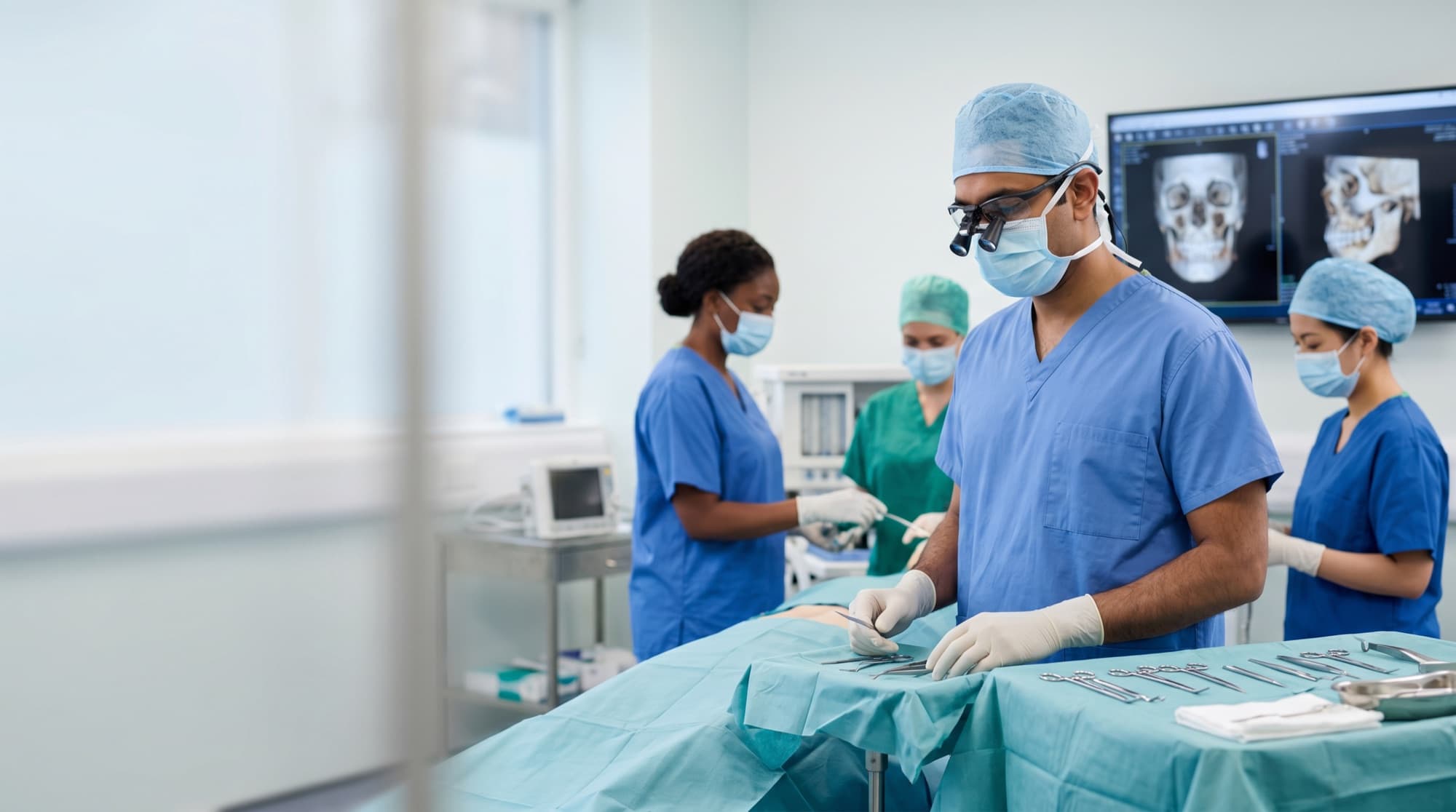
OMFS ST1 · 2027 Interview
Oral & Maxillofacial Surgery
No shortlisting: everyone eligible is interviewed. Four 7-minute stations, and you need 60 per cent overall and 40 per cent in every one.
Your interview toolkit
Everything you need to prepare for your interview
£120
3 month access
Model answers for every scenario, with scoring points and audio of delivery.
2027 Update:Now recruited at ST1: four 7-minute stations, and a new self-assessment scored into your rank
What to expect
Stations, timings and how you’re scored
You need a medical and a dental degree. Everyone eligible is interviewed; to progress you need 60 per cent overall and 40 per cent in every station. In 2026 NHS England recorded about 3.4 applications for each post.
The Training Pathway Station
7 minutes
Commitment to specialty
Consultant maxillofacial surgeons ask why OMFS, what your medical and dental degrees add up to, and how well you know the training you are joining.
Show that you understand the dual-degree training and what it asks of you.
20 training pathway scenarios included.
The QIP, Audit and Research Station
7 minutes
Academic knowledge
Your quality improvement, audit and research work: one concrete project, what changed and what you learned.
Know the working distinctions too: audit against a standard, improvement methods, and when a project needs ethics approval.
10 audit and research scenarios included.
The Clinical and Situational Judgement Station
7 minutes
Clinical skills
Acute scenarios and on-call judgement: the threatened airway, the spreading neck infection, the facial fracture.
You manage them safely with early escalation, and speak up when something is wrong.
21 clinical scenarios included.
The Communication Station
7 minutes
Personal skills
A conversation with an actor playing a patient or relative: breaking bad news, consent, or honesty when something has gone wrong.
Practise it with someone playing the patient, so it sounds natural on the day.
11 communication scenarios included.
How the final rank is scored
2027 split, once you clear the interview thresholds. The evidence folder is scored before the interview and never decides whether you are appointable.
80%
Interview
20%
Evidence folder
From the person specification
"Shows realistic insight into Oral and Maxillofacial Surgery and the personal demands of surgery."
Commitment to specialty
"Understanding of research, including awareness of ethical issues."
Academic knowledge
"Ability to work safely under pressure and deliver good clinical care in the face of uncertainty."
Workplace skills
NHS England, Oral and Maxillofacial Surgery ST1 person specification, 2027.
Format and minutes: NHS England, Oral and Maxillofacial Surgery ST1 selection process, 2027.
How you’ll prepare
Interactive verbal practice, on any screen
Answer the interviewer out loud on your computer or tablet, then practise on your phone between shifts. One account works on your computer, tablet and phone.
Interactive learning
Your interview is a spoken assessment, so your preparation should reflect this.
Real-time marking
See your scores and where to improve.

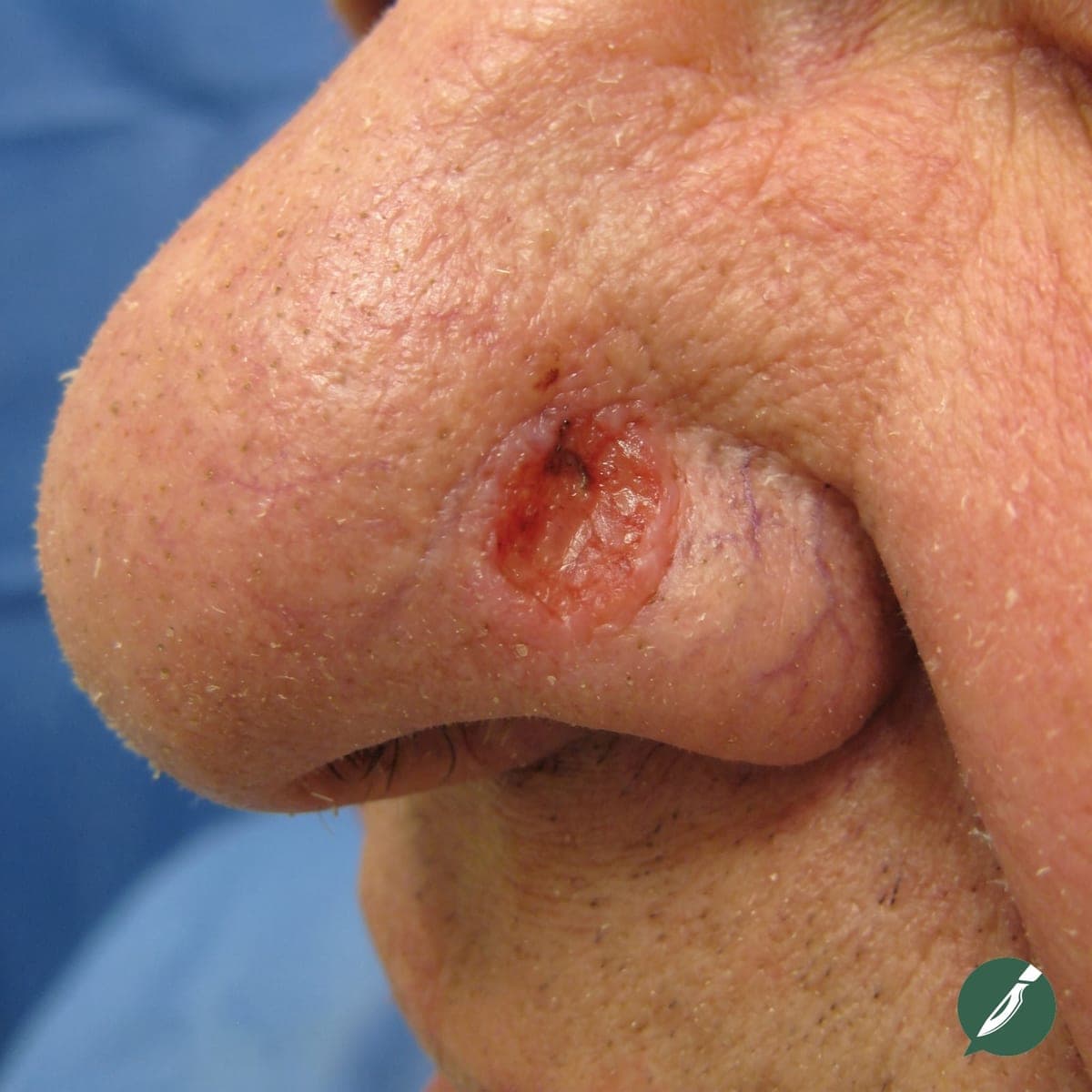
Personalised feedback
Your words, edited into a higher-scoring answer, with every change explained.
Timed mock interviews
5 full mock interviews, timed like the real one, with a report at the end.
Interactive learning
Your interview is a spoken assessment, so your preparation should reflect this.
Real-time marking
See your scores and where to improve.
Personalised feedback
Your words, edited into a higher-scoring answer, with every change explained.
Timed mock interviews
5 full mock interviews, timed like the real one, with a report at the end.
Your CV
Make everything you've done count
It's easy to forget your best examples on the day. Add your CV for personalised feedback: the audit, teaching or research you didn't mention, where it scores on the mark scheme, and anything your CV doesn't back up. We read it once and never store the file.
Oral & Maxillofacial Surgery
Your plan
Guides & articles
Know what matters, and when.
Clear, practical guidance on applications, portfolios, exams and interviews; updated for each recruitment cycle to help you plan your next step with confidence.




Oral & Maxillofacial Surgery ST1
Be ready for the OMFS interview
Practise all four stations out loud, then sit them as one timed interview.
Plans are paid once and do not renew. A plan covers one specialty, and you can try its first questions free.